An Airing of the Local Jewish Laundry
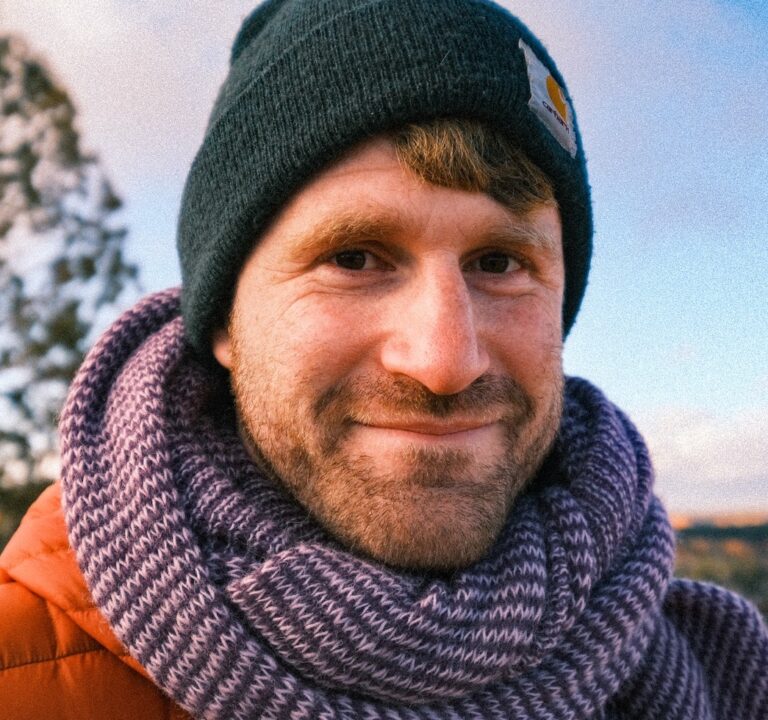
UCJfC member Jake McGinty details the systemic censorship and exclusion from our local Jewish institutions.
This article was originally published in the Public i.
To those unfamiliar with our local Jewish scene, our Champaign-Urbana community might seem small; but we in fact have four major Jewish institutions that pull a lot of weight in town: the C-U Jewish Federation, Sinai Temple, Illini Hillel, and Illini Chabad. Over the last two years, all four of these institutions have systematically suppressed Jewish voices who dared to question Israel, leaving a wake of fractures in our community we’ve yet to grasp the depth of.
The war of words, propaganda, and confusion from the community I grew up in has left me and my loved ones feeling more endangered from hate than ever before, but at the same time, I’ve never felt more protection and warmth in a community than I do from those fighting for Palestinians.
As a kid, I remember taking a field trip to an AIPAC (American Israel Public Affairs Committee) convention as part of my prescribed Jewish education. The pushiness with which they were trying to convince us kids to feel a certain way about Israel was such an off-putting experience that it propelled me to explore their deeper motives. Taking the first steps towards understanding this attempted indoctrination, I began a journey into understanding the Palestinian struggle against the extremist ideology that is contemporary Zionism, which had been embedding itself in Jewish culture for over a century.
In these last two years, the number of examples of these four institutions suppressing those they disagree with has grown and grown, revealing an alarming trend. It became clear to us that we are not an acceptable form of Jewish in their eyes for asking questions about Israel’s ethics, and they feel the authority to revoke our rights to participate in our local Jewish community.
In one case, a Jewish Holocaust scholar at the University of Illinois was invited to give a talk on their area of expertise, but the talk was cancelled abruptly because they were identified as someone who isn’t pro-Israel enough. In another case, a Jewish artist in our community was preparing to give a talk about a cultural event meant to build relationships across religion, race, and history. On suspicion that they weren’t Zionist enough, a group launched a campaign to cancel the talk. In yet another case, I and others tried to work within the C-U Jewish Federation by running for their board; they blocked us from running and changed the rules on voting at the last minute—we were told to participate in “other ways.” I later followed their advice and RSVP’d to an open community discussion, only to receive a curt last-minute email informing me I was banned from attending, with no explanation offered.
Even Sinai Temple has informed our community that keffiyehs (a traditional scarf that has become an important symbol of Palestinian solidarity) are not allowed on their property, perhaps worried it might offend those who put up the “We Stand with Israel” poster that hangs there. The behavior sends an obvious, albeit avoidant, message: if you are a Palestinian Jew, no you’re not. If you’re a Jew who believes in the humanity of Palestinians, no, you’re not—you can be a Jew or pro-Palestinian, but not both.
It’s not widely known, but Champaign-Urbana has a long history of being a safe haven—if not a pioneer—for settler-colonial Zionism. Hillel, one of the most vehemently pro-Israel institutions in town, was founded here in Champaign-Urbana in 1923, only a few years after the Balfour declaration. Today, multiple national institutions on campus, like Hillel, Chabad, and the Jewish Federation, continue this tradition of harnessing generational Jewish trauma to drive massive support networks for Israel.
But there is another disturbing truth we must reckon with: American Jews on college campuses are being radicalized, joining the IDF (Israeli “Defense” Forces), and being sent en masse into Gaza to commit war crimes for Israel. Recently, a story made international headlines exposing Daniel Raab, a UIUC Alumni and celebrated member of Illini Chabad, as a sniper in the IDF who admitted openly and shamelessly to committing war crimes. Raab, who started as a varsity basketball player from the Chicago suburbs, now was caught repeatedly admitting to intentionally shooting unarmed civilians.
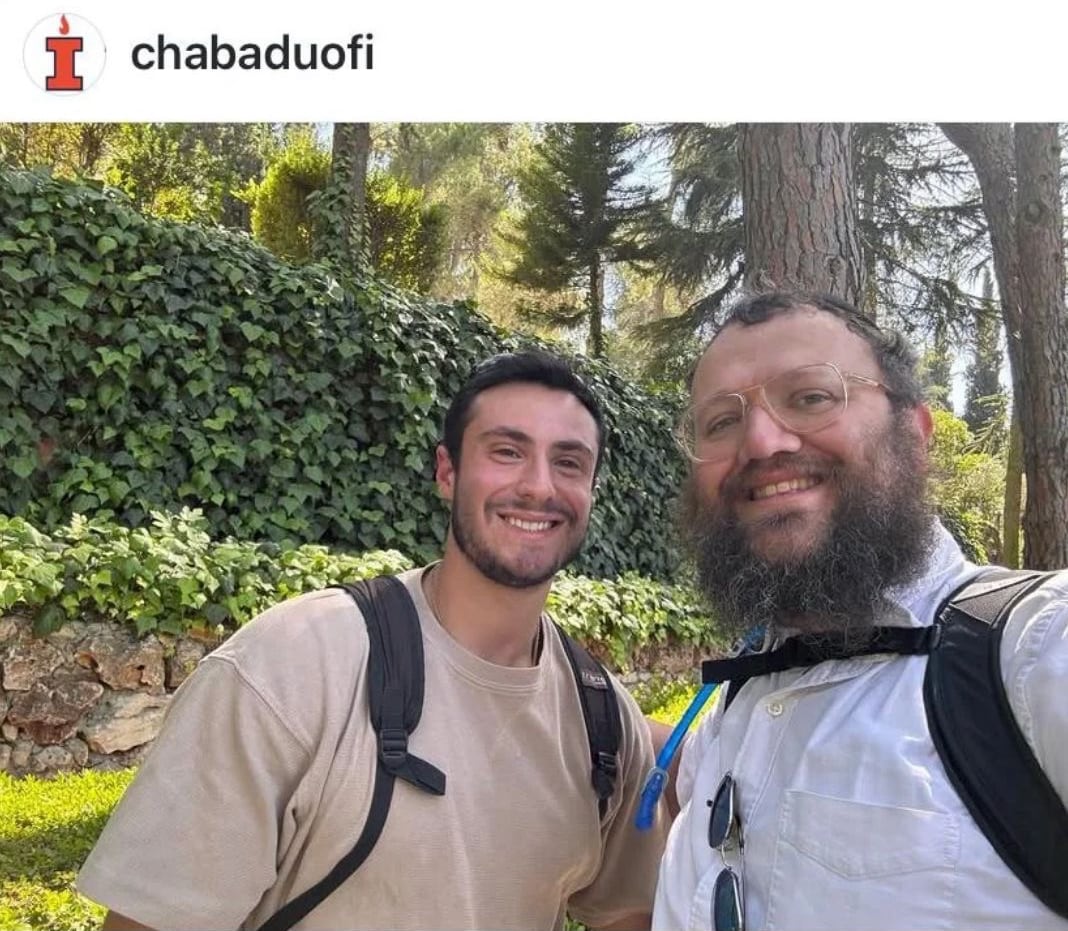
How did he get there? How do we allow institutions on our campus to power a student-to-IDF-soldier pipeline?
Jewish parents of UIUC students shouldn’t have to worry that their son or daughter might be in the next international headline for shooting children in Gaza, as so many other young American Jews have already been. Daniel Raab is but one sample product of this machine masquerading as religion that is weaponizing Jewish identity. Since 2023, Chabad has hosted multiple IDF war criminals on campus to give talks and be celebrated. Instead of having open discussions with the Jews that openly objected, they “took the high road”: rejecting dialogue and making childish, taunting social media posts to rub the event in our faces.
There is nothing safe about an ethno-nationalist movement exploiting a religion to build the promised land on the mass graves of children. There is a world of difference between Zionism and Judaism—let’s never forget that, and let’s not let our friends forget.
The legacy Jewish institutions in town refuse to accept this fact, leaving many Jews of conscience unprotected in an increasingly fascist, white supremacist, antisemitic world. In their void, we have kept busy building our own warm and welcoming spaces to do what we love most from our Jewish upbringing: asking questions, debating, eating together, and building better futures . . . and then eating again. Institutions don’t have souls—people do, and I look forward to a new community freed from lonely walls that kept so many quiet.